
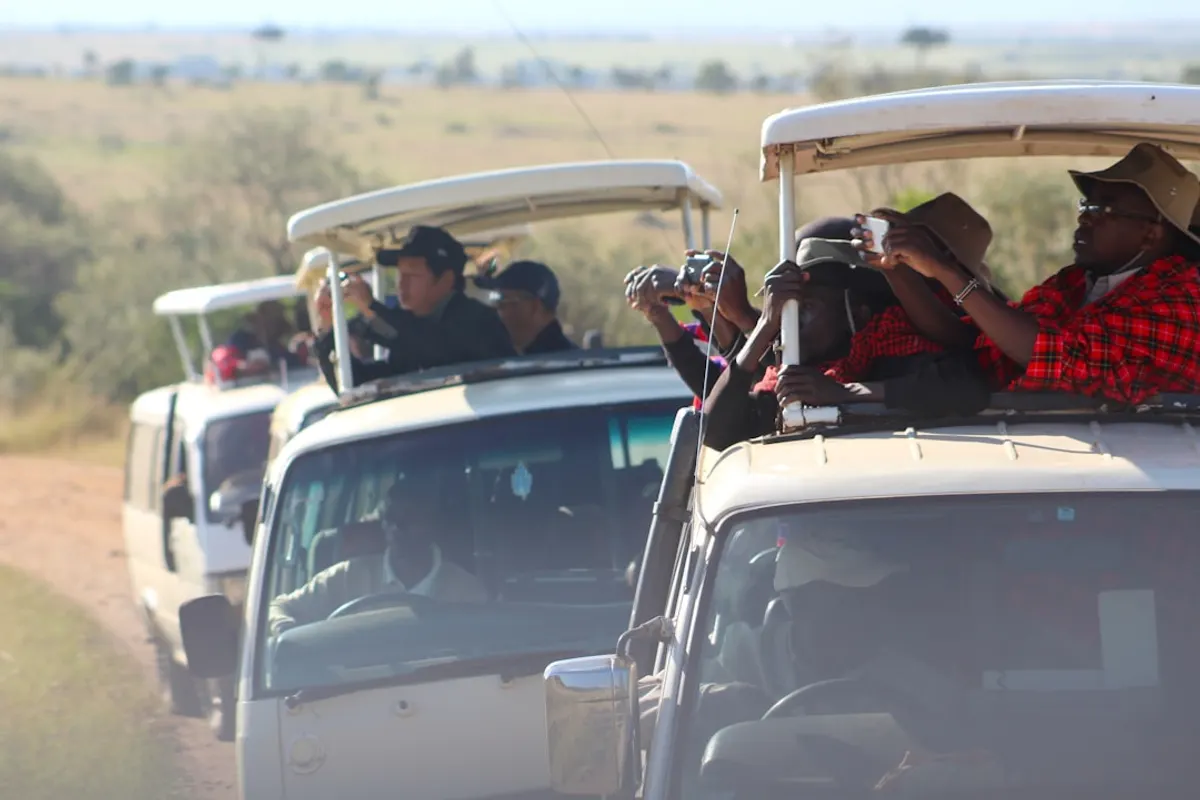
Every operator knows the squeeze. Marketplace leads cost a percentage of the booking, and several competitors are quoting the same traveller. Ads cost money whether they convert or not. The obvious wish — clients who come to you directly — is the right wish. What this guide covers is the part that usually goes unsaid: which channels actually produce direct bookings, in what order, and on what timeline.
One thing first, honestly: “no lead fees, no ads” does not mean free. It means paying with time and consistency instead of cash, on a horizon of one to two years. The channels below all work. What they will not do is work quickly, and the common failure is not choosing the wrong channel — it is stopping at month four, right before any of them start paying.
Why does niching down come first?
Because “safari operator in Kenya” is a contest you cannot win directly. The generic searches belong to marketplaces with fifteen years of content and six-figure review counts; a new website competing for “Kenya safari” is invisible for years, if not forever.
What is winnable is specificity. Photography safaris timed to the river crossings. Birding tours of the Rift Valley lakes. Safaris built around families with children under eight. Trips designed for solo women travellers. Each of those has thin competition, searchers with clear intent, and — this is the part that matters most — a concentrated community. A photography club, a birding forum, a family-travel group is a room where one happy client describes your trip to fifty people who want exactly the same trip.
Every channel in the rest of this guide works better narrowed. The niche is not a marketing tactic sitting alongside the others; it is the multiplier on all of them.
Is video really worth the effort?
For this industry, yes — and it is the channel most operators skip because it feels like extra work rather than marketing.
The reasoning is structural. A safari is a high-ticket purchase bought on trust, usually once, by someone thousands of kilometres away. Video is the only format that builds that trust before the first message: a traveller who has watched twelve minutes of your guide narrating a game drive has already answered the question every enquiry is really asking — can I trust these people with this trip?
The discipline that makes it work is treating video as search, not social. Not vlogs — answers. “What a four-day Masai Mara safari actually looks like at a mid-range budget.” “Serengeti or Masai Mara, filmed in both.” “What the drive from Nairobi to Amboseli is really like.” Titles shaped like the questions travellers type. Search-shaped videos surface when someone is planning, rank inside Google’s own results — which sidesteps the marketplaces’ text-search advantage entirely — and keep producing views years after upload. A feed post, by contrast, stops being shown within days.
The realistic bar: one useful video a week, filmed on trips you are already running, for a year. Fancy production matters far less than answering a real question.
How do you win local search?
Generic global search may be closed, but local search is wide open, and it is the fastest-moving channel on this list.
When someone types “safari company Nairobi” or “tour operator Arusha”, Google shows a map with three businesses before any website results. Getting into that box is not mysterious: a complete Google Business Profile, real photos added regularly, and — the part that does most of the work — a steady flow of genuine reviews.
The review habit is the whole game, and it has to be a habit rather than a hope. Ask on the last day, while the trip is still glowing, and send the direct review link before the client flies home. A dated ask in your follow-up sequence, applied to every client, will outproduce a competitor relying on whoever spontaneously remembers — and unlike marketplace reviews, these accrue to an asset you own.
How do you turn past clients into next clients?
Referrals are the strongest direct channel in travel, for a structural reason: a trip like this is bought on trust, and a recommendation from someone who has already taken it transfers that trust for free. But “hope they mention us” is not a channel. The difference between operators who get referral business and operators who merely deserve it is a written system:
- Capture every client — name, contact, trip, dates — in one place, not in a guide’s phone. A client you cannot contact is a referral you cannot ask for.
- Two weeks after the trip: send their photos and the review link. Photos get the message opened; the review builds the local-search asset above.
- Around six months: ask the direct question — is anyone you know planning a trip? — with a real incentive attached, whether a discount on their next booking or a thank-you payment per referred booking that lands.
- Recruit group leaders. The oldest model in touring still outperforms: the person who assembles a group of eight or more — a pastor, a photography-club chair, a professor, a family matriarch — travels free. One group leader is ten clients at zero acquisition cost, and groups tend to rebook as groups.
This is also where the regional market hides in plain sight. Kenya’s Tourism Research Institute counted 2.7 million international arrivals in 2025, with 47% from within Africa — travellers the overseas marketplaces barely serve, reachable almost entirely through exactly this kind of word-of-mouth.
Should you drop the marketplaces?
Not yet — and probably not on principle at all.
Platforms like SafariBookings charge a percentage of booking value per quote request, and operators generally report the leads convert. The trap is not using them; it is only using them, so that every year of trading builds their asset instead of yours. The workable pattern is a bridge: take marketplace leads early for cash flow and reviews, capture every one of those clients into your own records the moment they book, run them through the referral sequence like any direct client, and let owned channels grow underneath until the paid channel is optional.
There is even a compounding detail here: marketplace rankings reward fast responses — SafariBookings factors response time into where you rank — so the same follow-up discipline that powers your direct channels makes the paid channel cheaper per booking too. Speed matters just as much on direct enquiries; the research on how fast to reply is in our guide to following up with travel leads.
What does the first year actually look like?
Month one: pick the niche, set up the Google Business Profile, start the review habit with current clients. Months one to twelve: one search-shaped video a week, review ask on every trip, referral sequence running on every past client you can still reach. Months six to twelve: the first direct enquiries arrive — usually from local search and referrals first, video second. Year two: the flywheel either exists or it doesn’t, and the deciding variable will not have been talent or budget. It will have been whether the system ran every week, including the busy ones.
That last condition is the real requirement. None of these channels needs money; all of them die without consistency, and consistency is a records problem — knowing which client is due which follow-up, which review ask went out, which lead came from where. Operators who keep that in their heads run the system until the first busy season, and then stop.
See how client CRM keeps every past client and their follow-up dates in one place, or start with the leads pipeline so direct enquiries never sit unanswered.